The Garden as an asset: when Landscape Increases Property Value
Why landscape is now one of the most underestimated resources in luxury real estate
For a long time, the garden was considered a secondary phase of a project, often defined only after architecture and interiors.
Outdoor space played a largely decorative role, while property value was attributed almost exclusively to the quality of interior environments. Today, this approach is no longer sufficient.
In today’s market, a property’s value increasingly depends on its ability to offer a complete and coherent living experience.
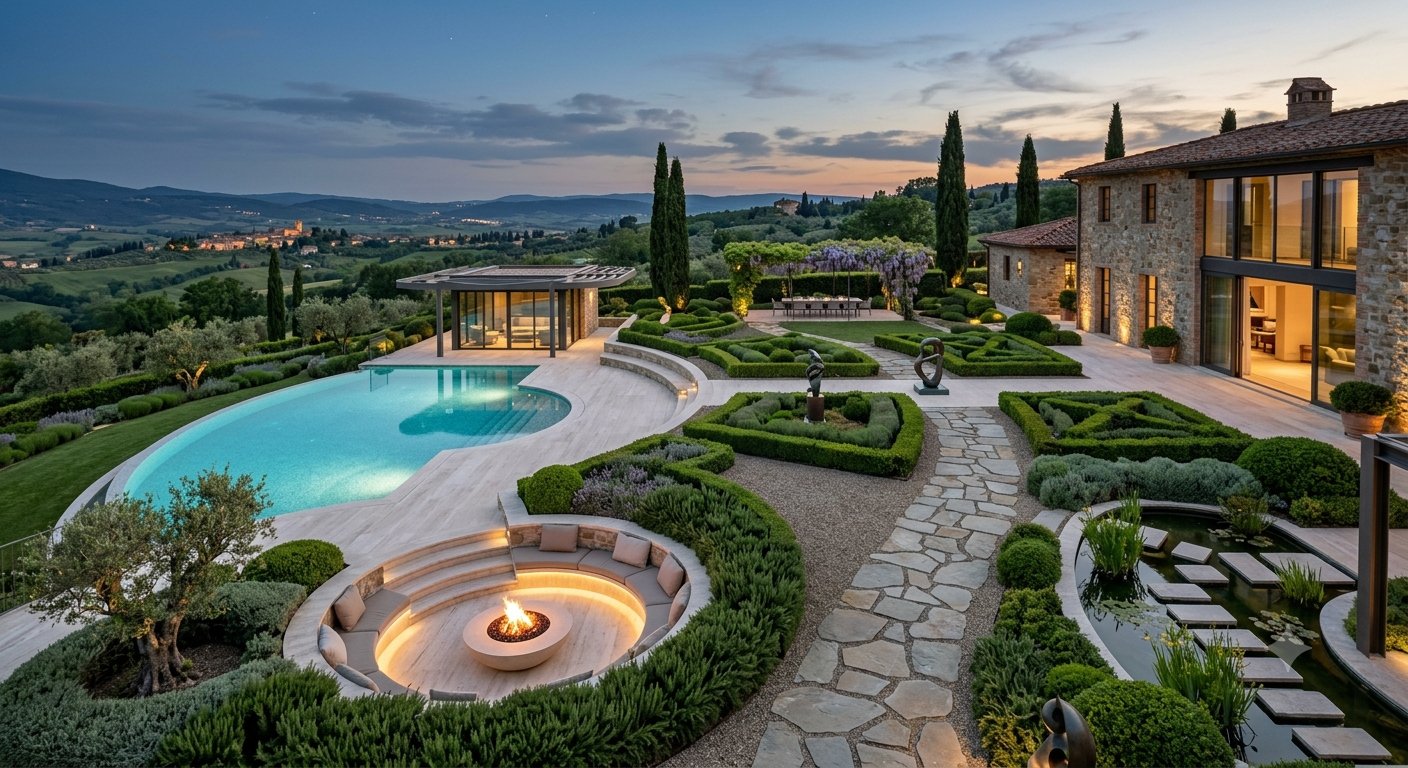
Within this context, landscape is no longer an accessory element, but a strategic component that directly impacts both perception and overall identity. A well-designed garden does not simply frame architecture, it defines how it is experienced. It introduces rhythm, depth, and continuity between indoor and outdoor spaces, creating a spatial quality that cannot be replicated indoors. It is a constant experiential value: discreet, yet decisive.
The difference becomes evident over time
A garden without a clear design vision tends to lose structure quickly: proportions shift, relationships between elements weaken, and maintenance becomes increasingly ineffective. What initially appears orderly gradually loses coherence.
By contrast, a well-designed landscape is based on precise logic.
It considers plant growth, the balance between solids and voids, exposure to light, and integration with architecture. It is not conceived for immediate effect, but to evolve while maintaining balance and clarity.
In this sense, time becomes a true design factor.
Plants mature, spaces transform, and certain elements take on an increasingly structural role within the property. A well-positioned tree is not merely decorative, it defines shade, perspective, and the character of the entire space.
This clearly highlights the difference between cost and investment:
A garden without vision requires continuous interventions that generate no real value.
A properly designed landscape, on the other hand, stabilizes over time, reduces the need for extraordinary maintenance, and preserves consistent quality.
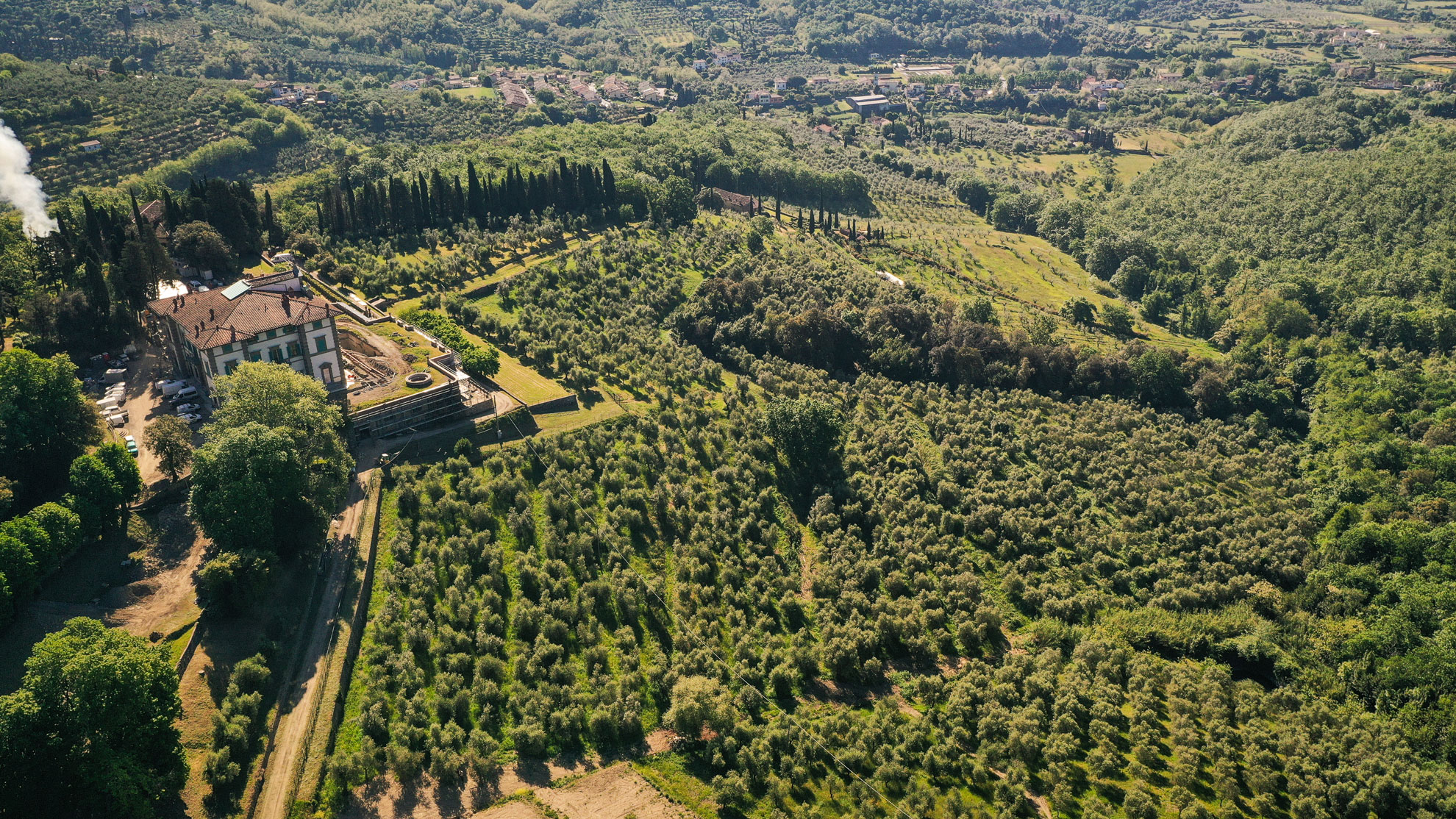
Sustainability as a design choice
Sustainability is not just an environmental principle, it is a concrete design decision.
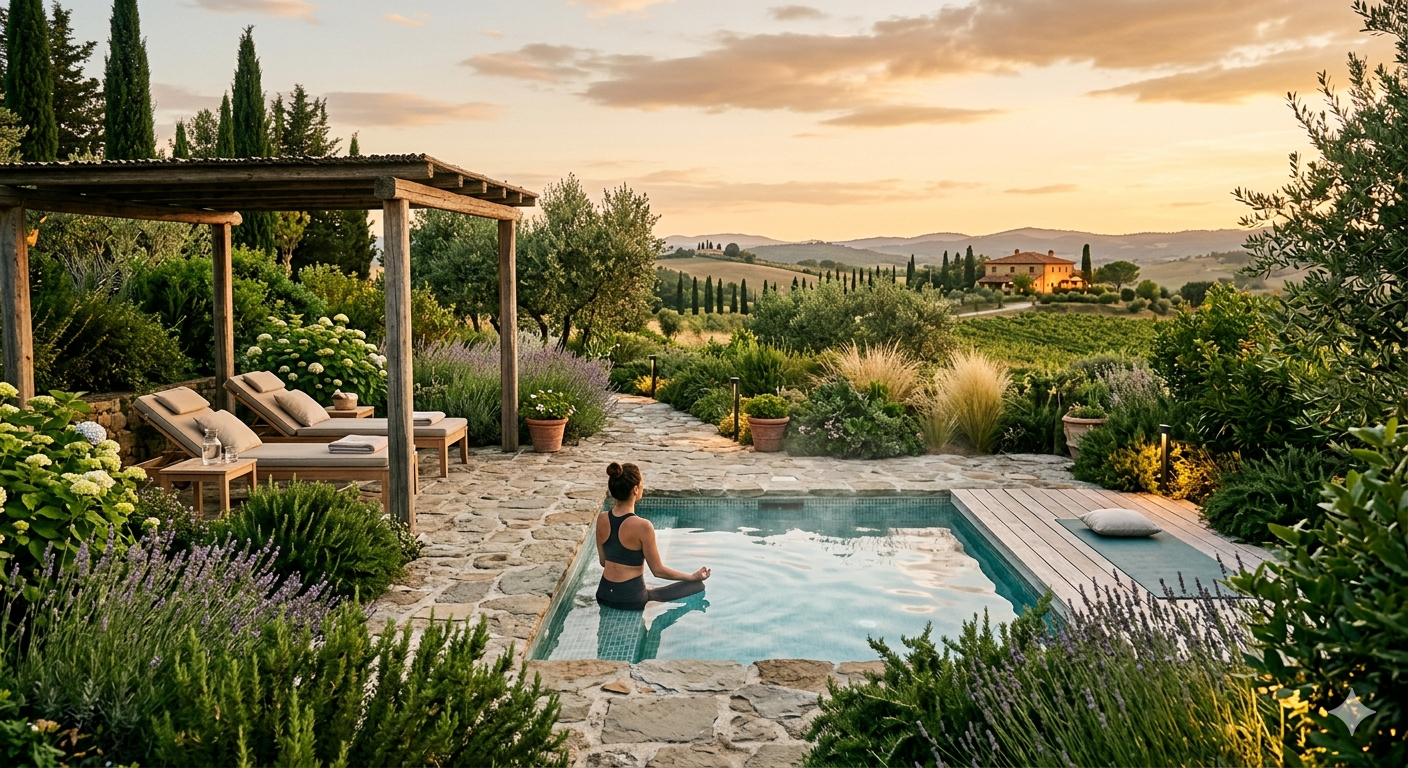
Climate-appropriate species, efficient water management, and coherent solutions make the system more resilient and stable over time.
Another key factor is timing.
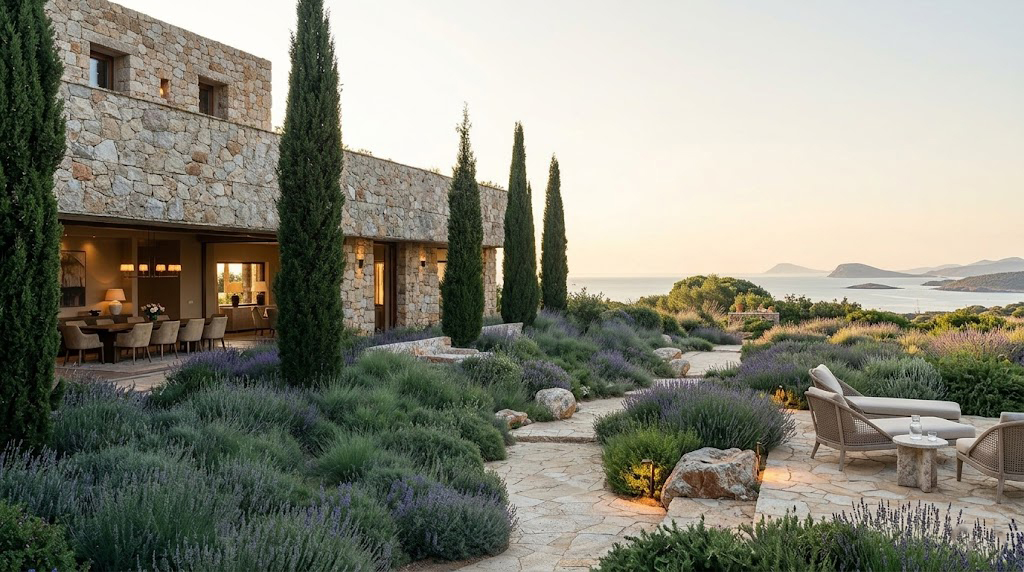
When the landscape is conceived as an integral part of the project from the outset, stronger relationships are created between architecture and outdoor space, views are enhanced, and spatial distribution is optimized.
In the luxury market, the concept of value is evolving.
It is moving away from excess and toward a more essential dimension, defined by balance, proportion, and quality. The landscape perfectly reflects this transformation.
A high-end garden does not need to be spectacular.
Its strength lies in its ability to function over time supporting architecture without overwhelming it, and improving progressively through the natural growth of its elements.
To consider the garden as an asset means adopting a broader perspective:
it means recognizing that landscape is not a final accessory, but a strategic lever of real estate value.
In many cases, it is precisely what distinguishes an ordinary property from one capable of maintaining and increasing its value over time.