The Mediterranean Garden: A Timeless Trend
One of the most authentic and enduring expressions of landscape
More than a trend, it represents a way of living outdoor space rooted in the deep relationship between nature, climate, and cultural context.
It is a language that does not need constant reinvention, because it is based on already perfect balances. Its strength lies in its apparent simplicity.
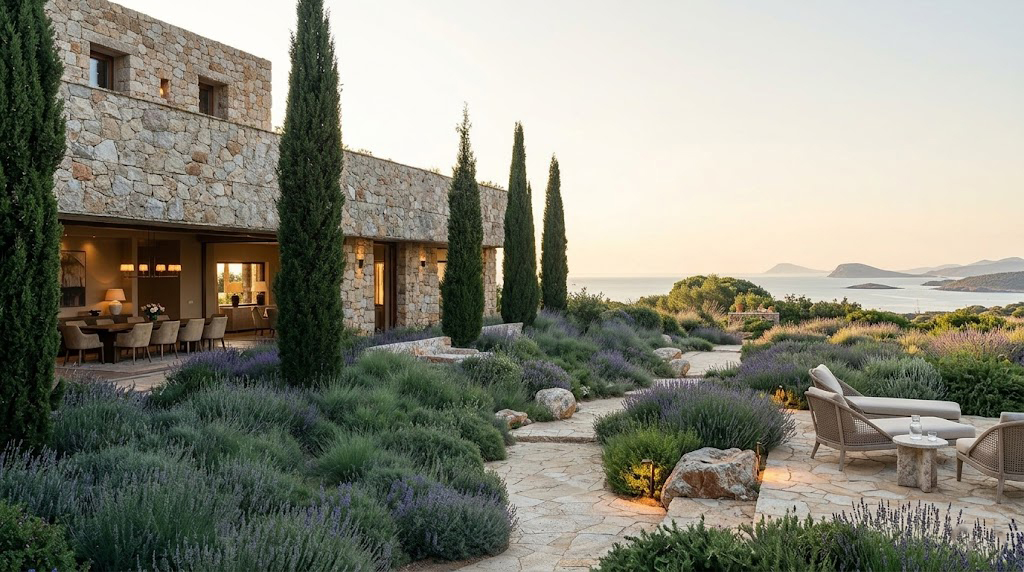
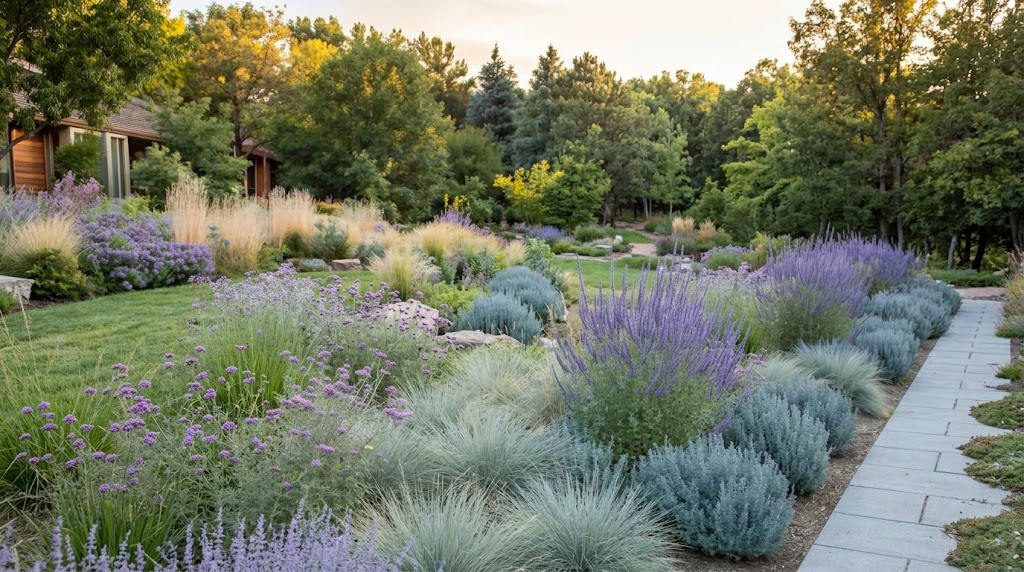
Typical plants such as olive trees, cypresses, holm oaks, citrus, lavender, and rosemary are not chosen for visual effect, but for natural adaptation. They thrive in heat, drought, and intense light, creating landscapes that are coherent and timeless.
In Mediterranean landscapes, light is never neutral
It changes throughout the day, shapes spaces, and creates strong contrasts between solids and voids.
Tree canopies act as natural filters, light surfaces reflect the sun, and every element contributes to a visual balance that is constantly evolving.
The Mediterranean garden is based on restraint.
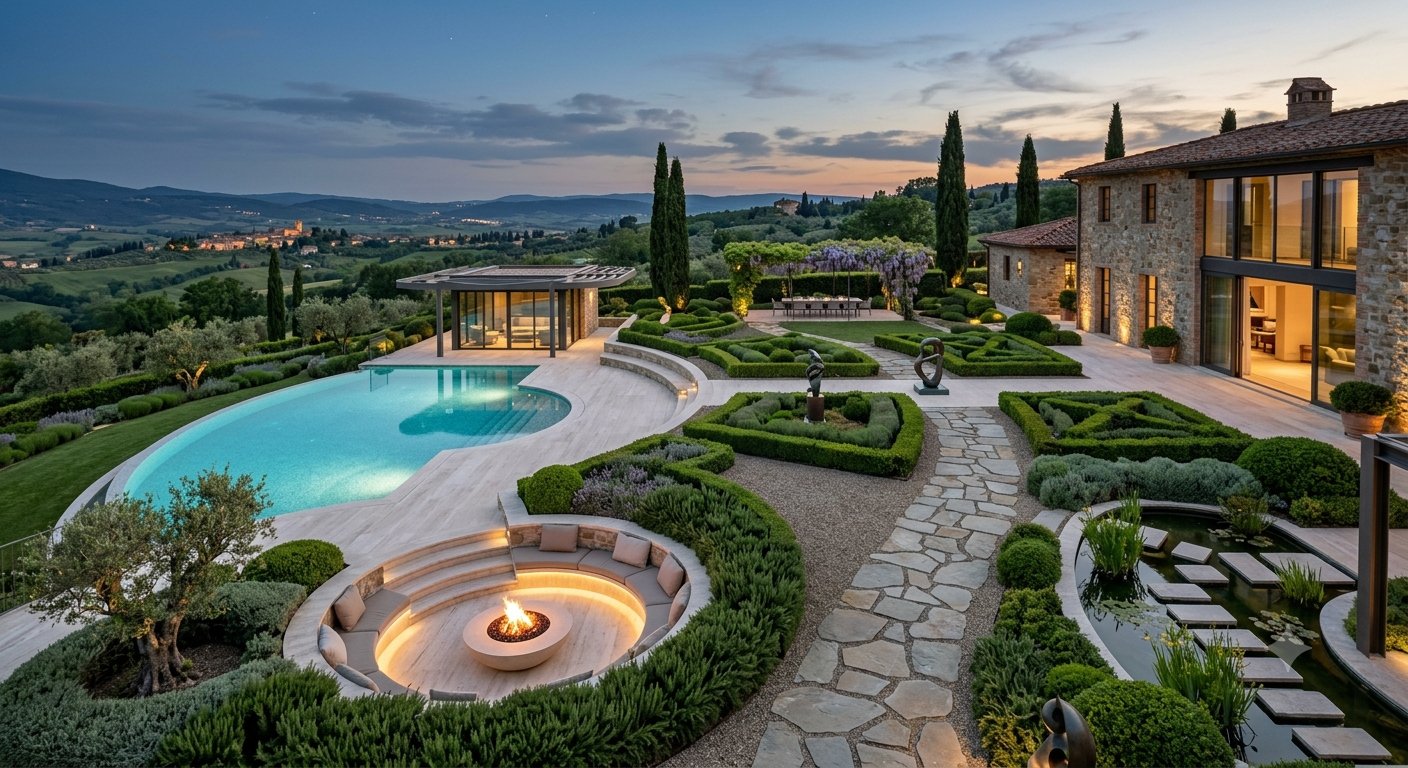
There is no excess, but a balance between vegetation and open space. This relationship between density and openness creates a sense of natural order, where everything appears spontaneous but is in fact the result of precise design harmony.
Materials also play a fundamental role.
Stone, terracotta, gravel, and natural surfaces are not decorative elements, but integral parts of the landscape.
They age over time, evolve, and integrate with the environment rather than contrasting it.
It is this slow transformation that keeps the Mediterranean garden consistently relevant.
Water, when present, is discreet and measured.
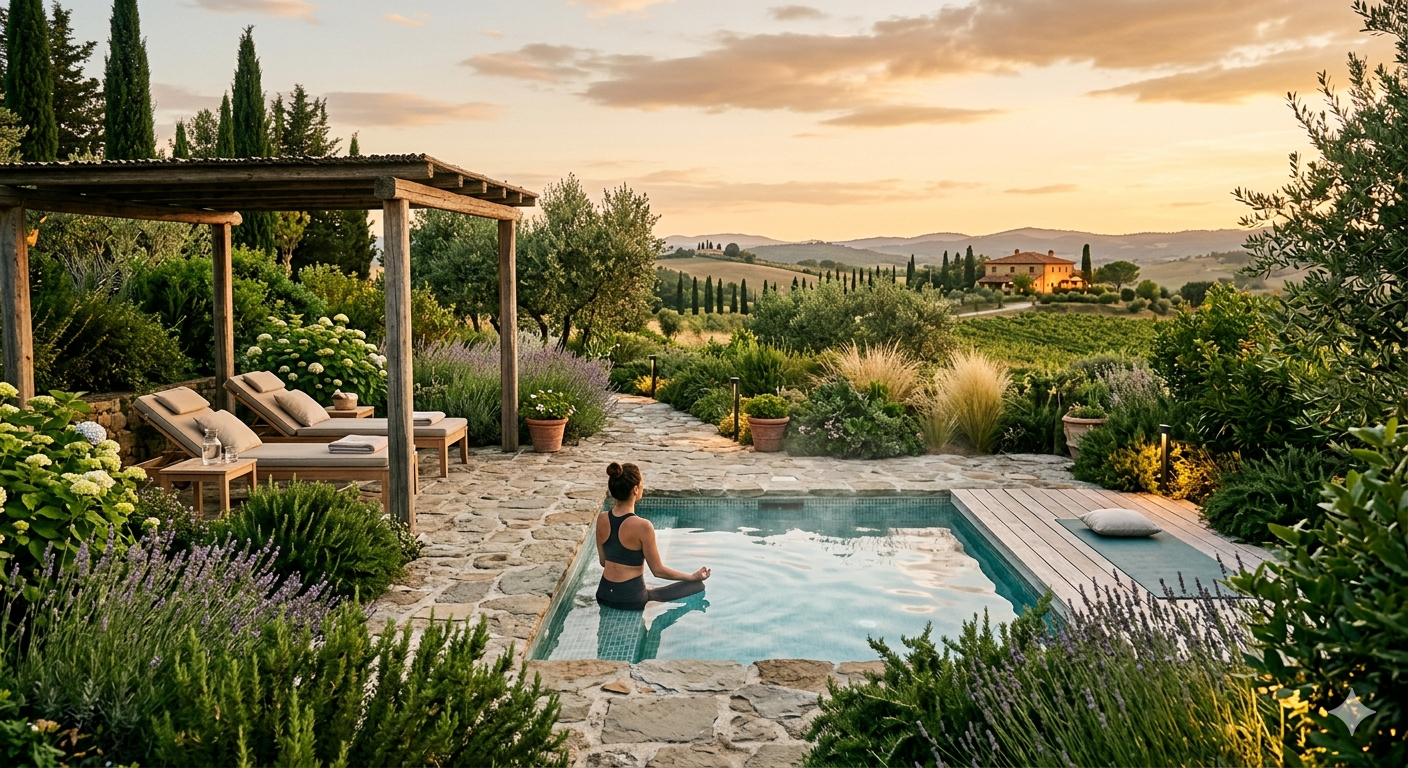
It never dominates the space, but accompanies it with subtle elements: a basin, a reflection, a gentle sound. Its role is to complete the sensory experience without disrupting the overall balance.
Designed to be lived
One of the most compelling aspects of the Mediterranean garden is its livability. It is not designed only to be observed, but to be inhabited.
Shaded areas become places of rest during the hottest hours, paths encourage slow movement, and each space responds to a different moment of the day.
There is also a temporal dimension that distinguishes it from many other landscape types. The Mediterranean garden is not static, it grows, transforms, and stabilizes over time.
Its beauty is not immediate and unchanging, but progressive, built year after year. In a context where trends change rapidly, the Mediterranean garden remains constant.
Not because it is fixed, but because it is rooted in natural principles that never lose relevance. It is a balance between aesthetics and function, culture and environment, a form of landscape that transcends time without losing its identity.